Wondering whether Littleton is a better fit for a classic older home or a newer build? You are not alone. Many buyers are drawn to Littleton because it offers both a preserved historic core and newer development areas, but the right choice depends on how you want to live day to day. This guide will help you compare character, maintenance, rules, layout, and location so you can search with more confidence. Let’s dive in.
Start With Littleton Boundaries
Before you compare homes, verify whether the property is actually within Littleton city limits. The city notes that many homes with a Littleton mailing address are outside municipal boundaries, and Littleton spans Arapahoe, Jefferson, and Douglas counties.
That matters because city services, zoning, and local rules may differ depending on the exact address. The city also notes that ZIP code 80120 is fully within city limits, while several other Littleton ZIP codes are only partially within the city or outside it.
Historic Littleton Appeal
If you love homes with personality, Littleton gives you real options. The city’s historic district includes Main Street, Alamo Avenue, and the streets in between, and the local historic inventory extends beyond downtown into established residential areas such as Louthan Heights and Arapaho Hills.
That means older housing in Littleton is not limited to one small pocket. You can find established areas with deeper ties to the city’s early development, more varied streetscapes, and homes that often feel distinct from one another.
What Historic Homes Look Like
Louthan Heights is a strong example of what draws buyers to older Littleton neighborhoods. The city describes it as Littleton’s first local historic landmark district, with homes built from 1921 to 1929.
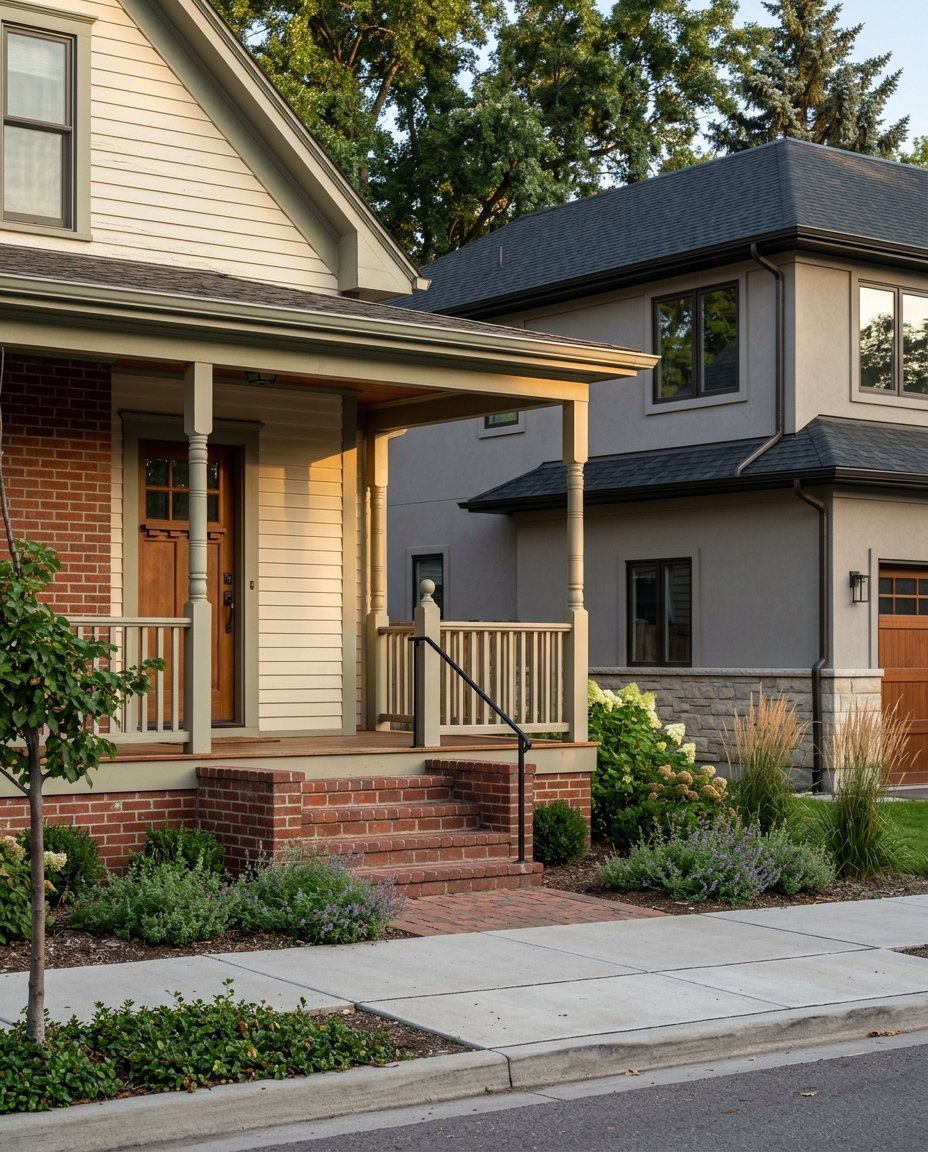
Many of those homes feature Craftsman details like broad porches, clipped gable roofs, overhanging eaves, and exposed rafters. If you are looking for architecture with visible detail and a strong sense of place, that kind of housing stock can be very appealing.
What Historic Ownership Requires
Historic charm comes with added responsibility. According to the city, exterior modifications and additions to designated historic properties require city approval, while exterior maintenance and interior work do not require approval.
The city also requires owners of designated historic properties to keep the structure and landmarked property in good repair. Some designated properties may qualify for state income tax credits or city property-tax refunds, although properties in the Downtown Historic District are excluded from the city refund.
Why Historic Homes Feel Different
Historic districts in Littleton are designed to preserve compatibility, not freeze properties in time. Still, exterior alterations, additions, and demolition are subject to review, which can shape what ownership feels like.
In practical terms, older neighborhoods often have more variation in lot shape, setback pattern, and home design. For many buyers, that creates a stronger sense of individuality. For others, it may feel less predictable when budgeting for changes or planning future projects.
Newer Builds in Littleton
If your priority is a more modern layout, simpler comparison shopping, or a more structured neighborhood plan, newer Littleton developments may be a better match. The city’s development records show a mix of housing types, including multifamily, single-family attached housing, plat work, and mixed-use development.
Examples include Powers Place, a 325-unit multifamily development, a 260-unit single-family attached project with parks and open space at 7875 S Santa Fe Drive, and Littleton Village II plat work. RiverPark adds another layer, with a 34-acre mixed-use plan that includes residential, retail, restaurant, office, entertainment uses, and pedestrian connections to Mineral Light Rail Transit Station.
Why Newer Communities Feel More Uniform
Newer neighborhoods in Littleton are often guided by design standards from the start. Parkvue’s design guidelines emphasize smaller-scale attached housing, continuous streets and alleys, and usable common open space.
RiverPark’s design vision calls for modern agrarian architecture and natural materials. The city’s zoning portal also notes that planned development overlays may include developer-specific rules for setbacks, lot size, height, and allowed uses.
That structure can make homes easier to compare from one property to the next. If you value consistency in neighborhood layout and exterior standards, that may be a plus.
How Lot Size Can Differ
A newer home does not always mean a small lot, but it does mean you should read the plat and zoning notes carefully. In older areas, lots are often shaped by historic plats and long-established street patterns.
In newer planned communities, more land may be reserved for shared open space, internal circulation, and attached-home layouts. So instead of assuming every Littleton home comes with a large private yard, it is smart to compare how outdoor space is actually organized.
Compare Ownership Experience
One of the biggest differences between historic homes and newer builds is how responsibilities are handled after closing. In many newer communities, shared ownership rules and common spaces are part of daily life.
Colorado’s HOA Center says common-interest communities are governed by the Colorado Common Interest Ownership Act. The Center also notes that associations are generally responsible for common elements, while owners are responsible for their own units.
Newer Builds and HOA Structure
That often means newer Littleton neighborhoods are more likely to include CC&Rs, assessments, reserves, and rules about exterior appearance or shared spaces. The exact setup varies by subdivision, but the ownership experience is usually more collective.
Colorado’s HOA Center advises buyers to understand governing documents before they buy. That is especially important if you want clarity on what you maintain yourself, what the association handles, and what rules may affect future changes.
Historic Homes and Maintenance
Older homes usually create a different kind of to-do list. If the home is a designated historic property, the city requires upkeep and maintenance, and visible exterior changes may need approval.
That tends to suit buyers who appreciate character and are comfortable with more hands-on ownership. It can also require more careful planning when choosing contractors or budgeting for improvements.
Lifestyle and Location in Littleton
Your best fit is not only about the house itself. In Littleton, location can shape how you use the home and the area around it.
Transit is one of the city’s clearest advantages. RTD’s Littleton/Downtown Station at 5777 S Prince Street is a D Line rail station and park-and-ride served by four bus routes, and the city says Littleton has two light-rail stops: downtown and Mineral Avenue/Santa Fe.
Historic Core Lifestyle
If you want quick access to civic and cultural amenities, the historic core stands out. The city highlights historic downtown, the Littleton Museum, Bemis Public Library, South Platte Park and Carson Nature Center, and a broad parks-and-trails network.
The city also notes that the Littleton Main Street Historic District was placed on the National Register in 1998. For buyers who prioritize walkability, local identity, legacy buildings, and shorter trips to shops and restaurants, that setting can be very appealing.
Newer Corridor Lifestyle
If you prefer newer housing options, the south corridor and planned development areas may offer a better match. Projects like RiverPark tie housing to mixed-use planning and pedestrian connections near the Mineral station.
That can be useful if you want modern design, access to transit, and a neighborhood built with shared amenities or organized open space in mind. The feel is often more planned and more standardized than in Littleton’s older blocks.
Historic vs Newer at a Glance
| Feature | Historic Littleton Homes | Newer Littleton Builds |
|---|---|---|
| Home style | More architectural variety and period details | More consistent layouts and design standards |
| Lots and setbacks | Often shaped by older plats and street patterns | Often guided by planned development rules |
| Exterior changes | May require city approval if designated historic | Often governed by HOA rules or planned development standards |
| Maintenance | More individualized and often more hands-on | May include shared responsibilities for common areas |
| Neighborhood feel | Established, varied, and tied to local history | Planned, standardized, and easier to compare |
| Common appeal | Character, charm, and distinct identity | Modern layouts, structure, and shared amenities |
How To Decide What Fits You
If you are torn between the two, start with your daily priorities instead of just the listing photos. Ask yourself whether you care more about distinctive architecture or a newer floor plan, whether you want private responsibility or shared maintenance, and whether you are comfortable with either historic review or HOA oversight.
It also helps to verify each property’s city limits, county, and zoning before making comparisons. In Littleton, that extra step can save you from assuming two similar mailing addresses come with the same rules, services, or ownership experience.
A thoughtful home search should match both your budget and your lifestyle. If you want help sorting through Littleton’s older neighborhoods, newer communities, and the details that matter between them, Keely Hawk can help you narrow your search with clear, local guidance.
FAQs
What makes a historic home in Littleton different from a newer build?
- Historic homes in Littleton often offer older architecture, more varied lots and setbacks, and stronger ties to the city’s early development, while newer builds tend to have more standardized layouts, design rules, and shared neighborhood planning.
Do Littleton historic homes have renovation rules?
- Yes. The city says exterior modifications and additions to designated historic properties require city approval, while exterior maintenance and interior work do not require approval.
Do newer Littleton neighborhoods usually have HOAs?
- Many newer communities are more likely to include CC&Rs, assessments, reserves, and rules for exterior appearance or shared spaces, although the exact structure varies by subdivision.
Are all homes with a Littleton address inside Littleton city limits?
- No. The city warns that many properties with a Littleton mailing address are outside city boundaries, so you should verify the exact jurisdiction, ZIP code, and county before comparing homes.
Which part of Littleton is better for transit access?
- Downtown-adjacent areas and south-corridor developments are especially relevant for buyers who want rail access, since the city has light-rail stops downtown and at Mineral Avenue/Santa Fe.
How should you choose between Littleton historic homes and newer builds?
- Focus on how you want to live: choose older homes if you value character and can handle more hands-on upkeep, or choose newer communities if you want modern layouts, shared amenities, and a clearer rulebook for ownership.